Books
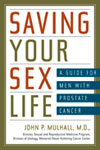 Saving Your Sex Life
A Guide for Men with Prostate Cancer
by John P Mulhall
In a straightforward style, Dr. John Mulhall guides the reader through the basics of male sexuality, explains the role of testosterone, the functions of the prostate, and the common difficulties men encounter when disease strikes. In plain language, this book spells out the causes and symptoms of prostate disease and diseases of the lower urinary tract and the approach to deal with the aftermath of treatment.
 Dr. John P. Mulhall is a board-certified urologist and microsurgeon who specializes in sexual and reproductive medicine and surgery. As a microsurgeon he performs delicate procedures using operating microscopes and miniaturized precision instruments on the very small structures in the genirourinary tract. As part of Memorial Sloan-Kettering Cancer Center’s Survivorship Initiative, he has helped establish a Male Sexual and Reproductive Medicine Program, which is devoted entirely to the care of men who have suffered sexual difficulties or fertility problems as a result of their cancer or cancer treatment. He directs the sexual and reproductive medicine team, which includes a nurse practitioner, a nurse, and a psychologist.
In the fall of 2008 he published the book Saving Your Sex Life: A Guide for Men with Prostate Cancer, aimed at informing men diagnosed with prostate cancer about the sexual effects of surgery as well as educating them about ways to maximize their sexual-function recovery.
$27.95
Buy eBook: $9.99
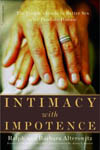 Intimacy with Impotence
The Couple’s Guide to Better Sex after Prostate Disease by Ralph Alterowitz & Barbara Alterowitz
-
A practical guide to help cancer survivors and their partners who are dealing with erectile dysfunction, Intimacy with Impotence gives couples cause for hope and includes: A discussion of impotence in lay term
-
Information on the commercial therapies and medications available and in research or trial at the time of publication - Practical advice about lovemaking – from getting in the mood to commonsense suggestions for erection-free satisfaction
When a couple faces erectile dysfunction, they have three choices: One is to end their sex life. The second is to try the aids and medications available to treat erectile dysfunction, keep their fingers crossed and hope for the best. The third choice is to transform their love life into a deeply satisfying emotional and sexual relationship by consciously changing the way they make love and not relying entirely on aids and medications. It is for the second and third group that this book was written – from survivor to survivor and from partner to partner. The goal: to have a strong, loving, exciting relationship, and to have great sensual sex as a way to stay connected as a couple – with or without erections.
$14.00
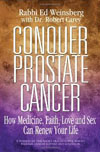 Conquer Prostate Cancer:
How Medicine, Faith, Love and Sex Can Renew Your Life
by Rabbi Ed Weinsberg, Ed.D., D.D., with Dr. Robert Carey, M.D., Ph.D.
This multiple award-winning book is an inspiring physical, spiritual and emotional guide for boomer and senior prostate cancer patients, survivors and their loved ones. The author and his wife share the most intimate details of their prostate cancer journey and provide profiles of 20 other survivors.
This book will help you:
-
Become an active member of your medical team
-
Reduce pain and stress and renew your vitality
-
Overcome impotence and incontinence
-
Enhance your intimate relationships
-
Draw strength from your faith, family, and friends
This book is available here or at www.ConquerProstateCancer.com, where viewers can read free articles on prostate cancer and intimacy, faith, humor, support and other resources.
$18.95
 A Patient Guide: Urinary Incontinence Control Using External Urethral Compression Devices (Clamp)
by Ralph Alterowitz and Carol Partington
A reference guide with pictures, descriptions and other relevant information about clamps to manage severe incontinence in men. This handy guide includes guidance about how to use.
One of the most dreaded side effects of prostate cancer treatment is urinary incontinence. A simple but comprehensive definition of urinary incontinence is “involuntary loss of urine that is sufficient to be a problem” (Centers for Medicare and Medicaid Services).
Nearly all patients undergoing for treatment of prostate cancer will be incontinent for a short period and some will suffer prolonged incontinence. Men opting for surgery will usually be incontinent for a few weeks following the procedure, and many men suffer prolonged incontinence which may last for years. Radiation therapy and cryotherapy may also cause incontinence, although not necessarily immediately following treatment.
Aside from the inconvenience and embarrassment of incontinence, there are medical, economic, psychological, and social consequences and costs. Some of these costs are financial, such as the cost of medical treatment for skin and urinary tract infections and the costs of incontinence products like absorbent pads, catheters, and clamps. The psychological and social burdens may be the most difficult to bear, however. Low self-esteem, depression, anger, and social isolation may occur resulting in a diminished quality of life.
A broad range of treatment options is available. These include medications, dietary management, physiotherapy, surgery, and supportive measures. Supportive measures include absorbent pads, catheters, condom-catheters, and external urethral compression devices, often referred to as penile clamps, or simply clamps. As the name implies, these devices are placed around the penis to compress the urethra (the tube which carries urine to the outside of the body).
Clamps are inexpensive, relatively simple to use, readily available, and may be covered by insurance, including Medicare when obtained with a prescription. There are two major types of clamps: rigid/semi-rigid and strap types. Rigid clamps have a plastic or metal frame whose shape cannot be altered; semi-rigid clamps have a malleable (bendable) metal frame. Strap type clamps, as is evident by their name, consist of a flexible strap. Most clamps have a specially designed ridge, or hump, the presses on the urethra, thus preventing urine from flowing to the outside of the body.
The publication, Controlling Urinary Incontinence using External Urethral Compression Devices (Clamps) discusses various aspects of incontinence, including types, consequences, and management options, and provides in-depth discussion of the use of clamps. Included are detailed descriptions and photos of available clamps, approximate costs, and contact information for the manufacturers.
$14.00